Retention Modeling & Operations
> Engineering a machine learning pipeline to mitigate revenue loss through proactive retention strategy.
Target Recall
74%
Churn Detection Rate
Baseline Churn
20%
Historical Revenue Leak
Model Champion
Gradient Boost
Optimized with SMOTE
Key Driver
Age & Depth
Primary Churn Signals
Analysis Visuals
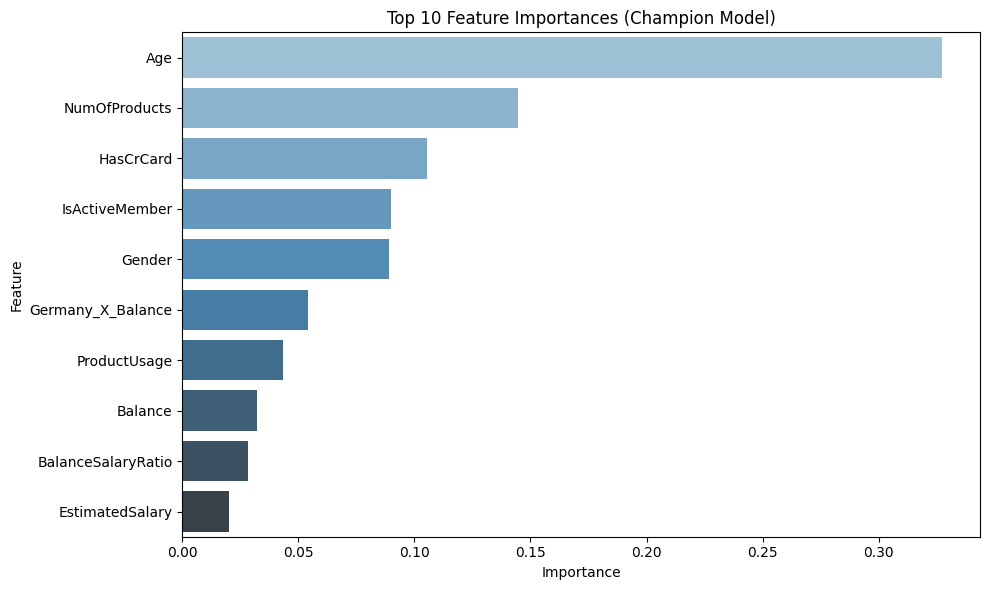
Technique: Feature Selection
Top Predictive Drivers
Age and number of products emerged as the strongest signals for model convergence.
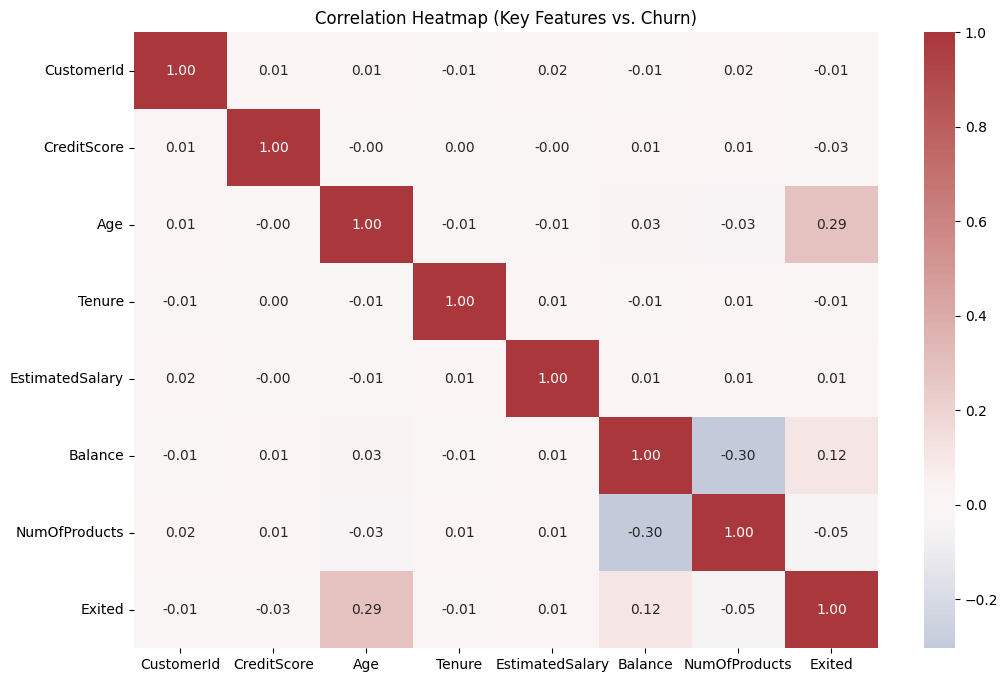
Technique: EDA
Multivariable Correlation
Heatmap identified redundant features and validated hypothesize interaction terms.
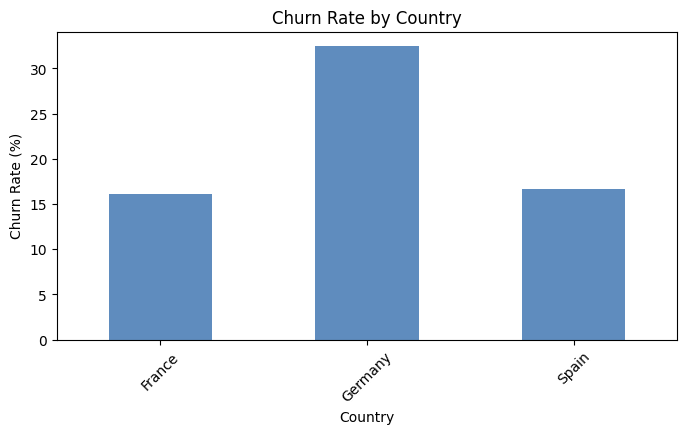
Technique: Spatial Analysis
Geographic Leakage
German customers exhibited a unique churn profile tied specifically to account balance.
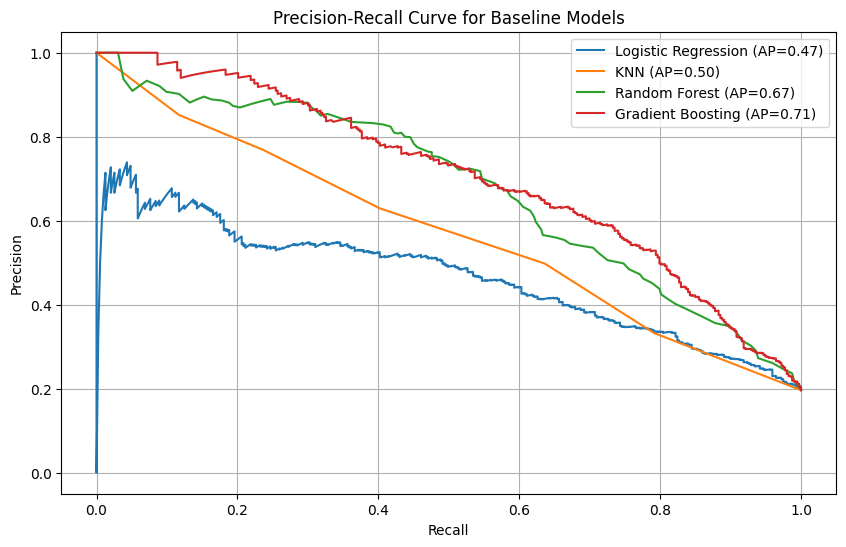
Technique: Performance Tuning
Precision-Recall Curve
Decision threshold tuned specifically to 0.45 to maximize recall for high-risk accounts.
The Analytical Workflow
Data Preparation & Cleaning
Handled extreme class imbalance using SMOTE. Engineered interaction features like `BalanceSalaryRatio` and `Germany_X_Balance` to capture subtle risk profiles missed by baseline models.
Hyperparameter Optimization
Utilized `GridSearchCV` and `RandomizedSearchCV` to optimize the Gradient Boosting champion. Balanced complexity vs accuracy to avoid overfitting to the training set.
Strategic Threshold Tuning
Calibrated the model to a 0.45 threshold. This maximized churner identification (74% Recall) while maintaining a precision actionable for business retention interventions.
Strategic Roadmap
- • Offer pre-approved credit cards to low-product accounts to deepen integration.
- • Trigger automated "Activity Nudges" for members flagging as inactive.
Geographic Focus
- • Specialized German retention desk focused on high-balance deposit rate matching.
- • Targeted financial advice campaigns for aged customer segments.
Technical Stack
Analyst Summary
"Predictive churn modeling isn't just about accuracy; it's about identifying the levers that can actually be pulled. By isolating inaction and product depth, we provide the bank with a direct operational script."
Github Repository